
Skip to content
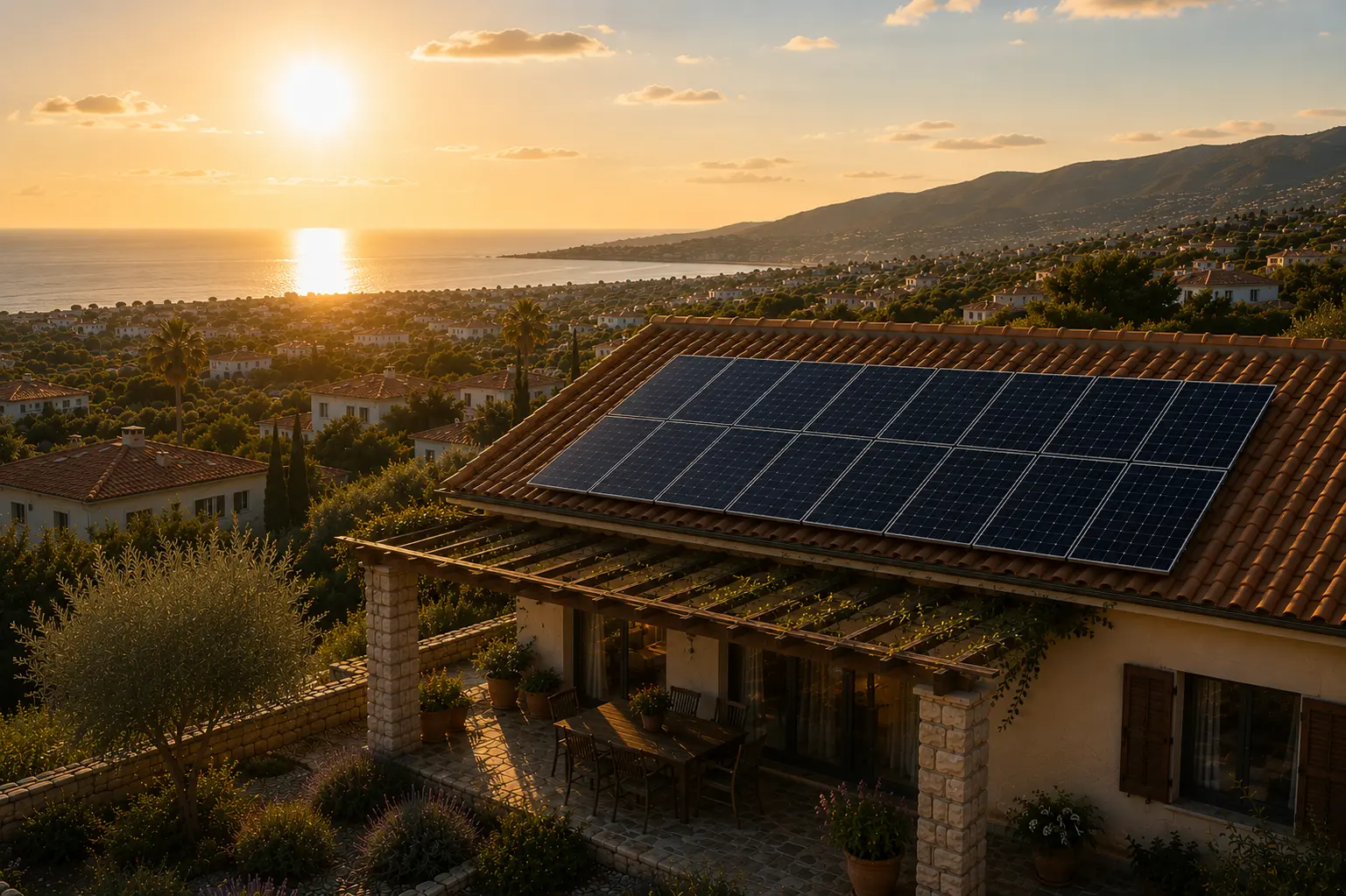
Solar panels covering the tiled roof of a house on a Cyprus hillside at sunset, with the town and the sea below and the sun low over the water.

Photovoltaic systems

Cyprus gets more sun than almost anywhere in Europe. A solar system uses it to produce electricity you would otherwise buy, and it keeps producing for decades. We design every system around the house it goes on.

Get your solar offer

The experience behind us runs to more than 20,000 Nordic installations

Buying solar should be straightforward. From the first home visit to the finished installation, you'll know what happens next, who is handling it and why.

Designed around your home

We come to you, look at the roof and read a full year of your consumption before anyone proposes a system size.

Get your solar offer

Save from the first month

Every unit your roof produces is a unit you don't buy. The saving starts the day the system is switched on.

Why solar is different in Cyprus

Our design philosophy

We size to your bill rather than to your roof area. Filling the roof is how people end up exporting half their production for a fraction of its value.

How we design every system

Support after installation

A solar system is a twenty-five year purchase. Ours stays our responsibility after the invoice is paid and the installers have gone.

What is included after installation
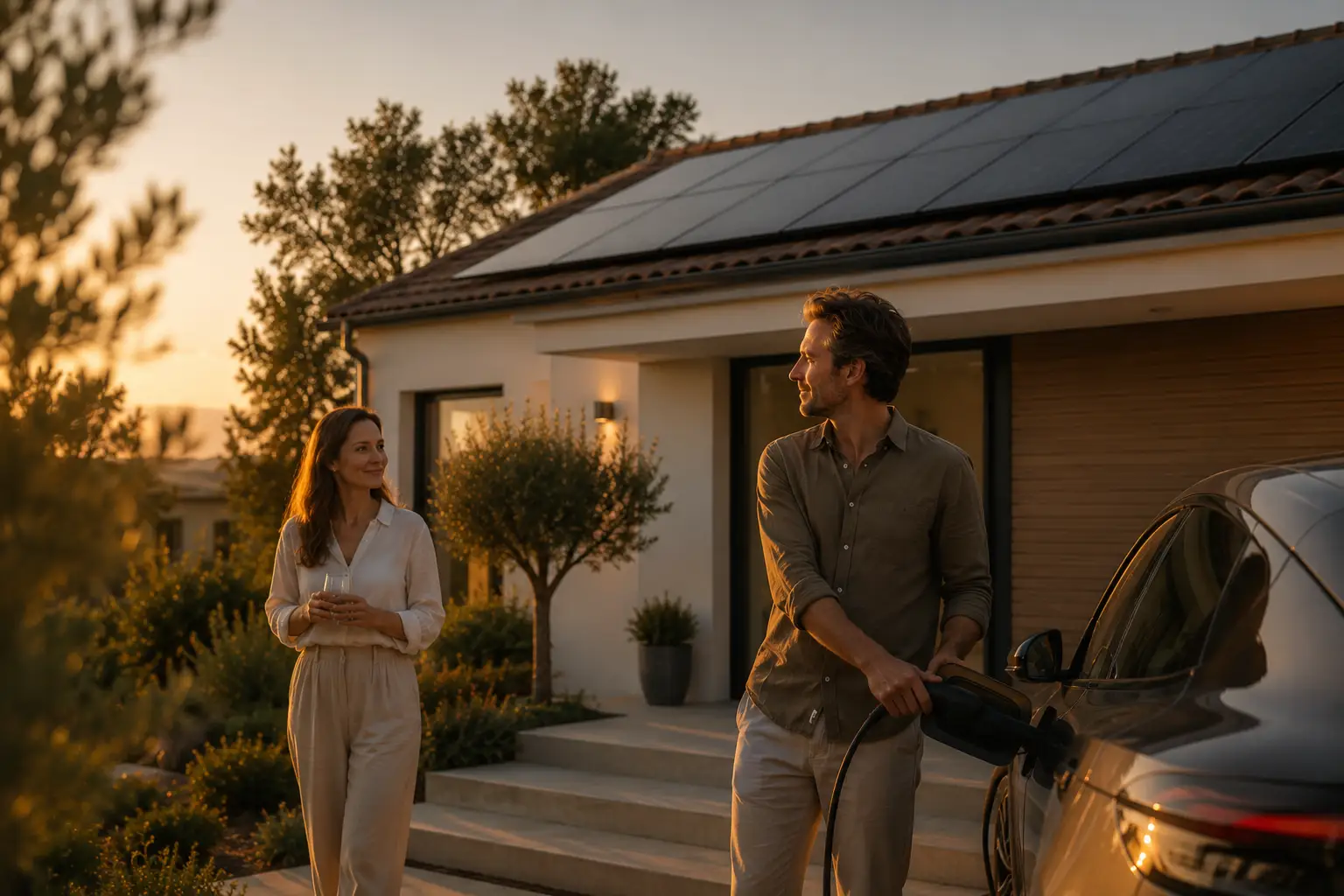
A couple outside their Cyprus home at sunset, one of them charging an electric car on the drive, solar panels on the roof above.

What changes when the roof makes the electricity

Nothing about the house looks different from inside it. The air conditioning runs the way it always did and the lights are the same lights. What changes is where the money goes.

  • The hottest months are the ones your roof produces most
  • Every unit you make yourself is one the price no longer reaches
  • Once it has paid for itself it keeps producing for two more decades
  • Nothing to learn and nothing to switch on
Get your solar offer

What would this mean on your roof?

Three questions and you have a figure built from our own installed prices, with every assumption written underneath it. No contact details, and nothing decided.

It is on your bill. A rough figure is close enough.

10,000kWh
What kind of roof is it?
Do you want to store what you do not use during the day?

The usual starting point. Covers most of a normal evening.

How we choose our solar systems

A solar installation is much more than the panels on your roof.

Every system we install is carefully selected as a complete solution, from the panels and inverter to the mounting system and monitoring. Our goal is simple: reliable performance for decades in the Cyprus climate.

Reliable solar panels

The panels produce the electricity, but long-term reliability matters more than the highest number on a brochure.

We choose manufacturers with proven products, strong warranties and a track record of performing well in the Cyprus climate.

The right inverter

The inverter is the heart of every solar system.

We choose inverters that are reliable, easy to monitor and ready for future upgrades such as battery storage if your needs change.

Built for Cyprus

High temperatures, strong sunlight and coastal conditions place different demands on equipment.

Every component we install is selected to perform reliably in the local climate, not just under laboratory conditions.

Strong foundations

A solar system should still be secure after decades on the roof.

That's why we use mounting systems designed for long-term durability and the environmental conditions found across Cyprus.

Designed to grow

Many homeowners add a battery, an EV charger or other electrical equipment later.

We prefer systems that can adapt over time rather than forcing you to replace major components.

Easy to monitor

Your solar system should be simple to understand.

We choose equipment that lets you see how much electricity your home produces and uses, helping you get the most from your investment.

Local support

If something ever needs attention, help should be available.

We work with manufacturers that have established support, spare parts and long-term presence in Cyprus.

Proven in real homes

We don't choose products because they are new.

We recommend systems that have performed well in real installations and earned our confidence over time.

Questions we get asked first

How long does the whole process take?

It depends on the property and on how quickly approvals come back. We give you an expected timeline in writing with your quote, and we tell you as soon as anything moves.

Do I need a battery straight away?

No. Many sites start with panels only. We plan the system so a battery can be added later without rewiring, and we show you the numbers for both options so you can decide.

Who handles the paperwork and approvals?

We coordinate them. The EAC application and the approvals are prepared and submitted through the appropriate licensed specialists, and NorthWatt is responsible for making sure they progress. You deal with us rather than with each party separately.

What happens after the system is switched on?

You receive the documentation for your system and a named contact at NorthWatt. If something needs attention later, you come back to us and we arrange it with the right specialist.

Who actually carries out the installation?

NorthWatt designs the system, owns the project and stays your point of contact. The installation and the regulated electrical work are carried out by qualified specialists we select and coordinate. You are not asked to manage them.

Will the panels cope with a Cyprus summer?

Heat reduces panel output, so we account for it when we size the system rather than quoting a best-case number. Equipment is chosen for high-temperature performance and for being serviceable on the island.

Ready to see what solar could look like for your home?

A home assessment is how a general case becomes your case: your roof, your consumption, your connection, and a proposal you can hold against any other quote.

Get your solar offer

We call to arrange a time that suits you. Nothing is decided until you have seen the proposal.

Solar in Cyprus, explained properly

Everything above is what you need to decide. What follows is for anyone who wants to understand the detail properly: net billing, sizing, the EAC process and what the figures actually rest on.

Why people install solar

The bill is the reason most people start. It is rarely the reason they are glad they did.

Electricity in Cyprus is expensive, and it is expensive for a structural reason: the island generates most of its power from imported fuel and has no interconnector to spread the cost across a wider market. That is not a temporary situation and it is not one a household can negotiate with.

A solar system does not lower the price of electricity. It reduces how many units you have to buy at that price, which comes to the same thing on the bill and to something rather different in how it feels. The money you would have spent on power becomes money spent once on a roof.

Four things tend to matter to people once the system is running, and they are not in the order you would expect.

  • The bill stops climbing with the temperature. Cooling is the largest household load here and it lands in exactly the months the roof produces most.
  • You are less exposed to a price you do not control. Every unit you make yourself is one that a tariff change no longer reaches.
  • It is an asset with a long life. Panels are warranted for 25 to 30 years, and a system that has paid for itself keeps producing well past that.
  • It is visible at sale. A property with a paid-off system has a documented running cost that a comparable one does not.
Illustrative householdOne home in Cyprus, before and after
Annual consumption
10,000 kWh
Bought from the grid before
10,000 kWh
Bought from the grid after
3,000-4,000 kWh
Produced on the roof
8,500-9,500 kWh

Panels and one battery. Figures are from our own installed prices and a full year of production; your roof will give a different number, which is what the assessment is for.

Why solar is different in Cyprus

Which kind of system suits you

Four arrangements, and the right one is decided by your grid connection and your consumption rather than by preference.

In most countries this question does not exist: you fit panels, you export the surplus, and that is the end of it. Cyprus has an isolated grid, so the network operator has to balance supply and demand within the island itself. That is why there is more than one way to connect a system here, and why the choice matters more than the panel brand.

The four below cover almost every property. Read the one that sounds like your situation and skip the rest.

Two of them are worth a sentence more. A zero export system is what gets approved where the network will not accept an export connection: the inverter is configured so nothing crosses the meter outward, and the surplus that would have been exported goes into storage instead, which is what makes the design work rather than simply throwing production away. With export off the table the whole calculation is about your own consumption, so oversizing has no upside and the survey matters more here than anywhere else.

Off-grid is a different design problem altogether. There is no grid to fall back on, so capacity is set against a run of poor days rather than against an average, and the design starts from what runs and when rather than from an annual figure. On a remote site it also has to be simple enough to check and service without specialist equipment on every visit.

Net billing

Panels feed the house first. Surplus is exported and credited at the export rate.

Suits most homes. The default, and what the rest of this guide assumes.

Net billing with a battery

The same, with storage holding the midday surplus for the evening.

Suits heavy evening use, or anyone who wants power through an outage.

Zero export

The system produces for the house only and cannot export at all.

Suits properties the network will not accept an export connection from.

Off-grid

No connection to the network. Panels and storage carry the whole load.

Suits land and buildings where bringing a supply in costs more than generating it.

The connection scheme usually matters more than the panel brand.

Battery storage

How net billing actually works

Your meter counts both directions. What you use as you make it is worth full price; what you export is worth less.

A solar system produces during daylight. Whatever the house is drawing at that moment is taken from the roof first, and only the shortfall comes from the grid. If the roof is producing more than the house is using, the surplus goes out to the network and is credited to your account.

The credit is the part people misread. An exported unit is not worth what an imported one costs. You are credited at the export rate and billed at the retail rate, and the gap between those two is why the same system can pay back in six years on one house and nine on another with identical panels.

This is the whole reason self-consumption matters. A unit you use as you produce it saves you the full retail price. The same unit exported and bought back later saves you the difference between the two rates, which is a fraction of it.

MorningMiddayEvening
  • What the roof produces
  • What the house uses
  • Used as produced
Production peaks at midday. Household demand does not. Only the shaded overlap is electricity you never had to buy.
Where 9,000 kWh of production goes, with no battery
Produced across the year
9,000 kWh
Used in the house as produced
3,600 kWh
Exported to the grid
5,400 kWh
Share used directly
40%

A daytime-empty house on net billing. The 40% is the figure a battery is bought to move, and it is the single number that decides how well a system without one performs.

The value comes from self-consumption, not from production alone.

Photovoltaic systems

What changes when you add a battery

Storage does not make the roof produce more. It moves what it already produced into the hours you are actually at home.

A battery is not an upgrade to the panels. It changes when you use what they made, and on net billing that is worth real money because the gap between the export rate and the retail rate is exactly what storage recovers.

On the assumptions this guide uses, it lifts self-consumption from roughly 40% to 70%. Where you land inside that depends on how much of your life happens after dark, which is why a battery should be sized from a year of your consumption rather than from the roof.

There is a second reason people buy one, and it is not financial. A battery with a backup function keeps the essential circuits alive through a network outage. Whether that is worth paying for is a household question rather than an arithmetic one.

  • More of what you produce is used at full retail value rather than exported at the lower rate
  • Evening consumption comes off the roof instead of off the grid
  • Less surplus goes out, which matters where export is capped
  • With backup, the essentials stay on during an outage

Without a battery

Used as produced
3,600 kWh
Exported
5,400 kWh

With one battery

Used as produced
3,600 kWh
Stored for the evening
2,700 kWh
Exported
2,700 kWh
The same 9,000 kWh. Nothing was added; 2,700 kWh moved from the grey band into the green one.
The same 9,000 kWh with one battery
Used in the house as produced
3,600 kWh
Stored and used later
2,700 kWh
Still exported
2,700 kWh
Share used directly
70%

The battery did not add a kilowatt-hour. It moved 2,700 of them from the export rate to the retail rate, which is where the payback comes from.

A battery moves electricity through time. It does not create more of it.

Battery storage

What decides cost and payback

Four things move the payback year, and only one of them is the price of the system.

Payback is the year the cumulative saving crosses what you paid. It is the number everyone asks for and the one most easily misquoted, because it depends on inputs that differ from house to house far more than the hardware does.

Roof orientation and shading set how much the system produces at all. Your consumption pattern sets how much of that production you keep at full value. The connection scheme sets what the surplus is worth. And the electricity price sets what every unit you avoid buying is worth, which is why a rising price shortens payback rather than lengthening it.

What moves it very little: the brand on the panel, within the range of manufacturers worth fitting at all. Two reputable panels of the same output on the same roof produce within a few per cent of each other.

A south roof instead of east or westEffect on paybackShorterHow much it moves itLarge
Heavy daytime consumptionEffect on paybackShorterHow much it moves itLarge
Adding a battery to an evening-heavy householdEffect on paybackShorterHow much it moves itModerate
Adding a battery to a daytime-empty householdEffect on paybackLongerHow much it moves itModerate
Partial shading left undesignedEffect on paybackLongerHow much it moves itLarge
A more expensive panel of the same outputEffect on paybackLongerHow much it moves itSmall

How an installation actually runs

Four stages, in this order. How long each one takes depends on the property and on the network, so we put the expected timeline in writing with your quotation rather than on this page.

From first contact to a system that is producing, this is the whole sequence. Most of the elapsed time is not work on your roof.

  1. 1

    Survey: Someone comes to the property, measures the roof, checks the meter and the supply type, and reads twelve months of consumption. Nothing is proposed before this.

  2. 2

    Design and proposal: System size, equipment, expected production and the assumptions behind it, in writing. This is what you compare against other quotations.

  3. 3

    Application and approval: The EAC application and the paperwork around it. This is where the calendar time goes, and the duration depends on the network rather than on the installer.

  4. 4

    Installation and commissioning: The physical work is usually one to three days for a house. Commissioning and the final inspection follow, and then the system is producing.

  1. 1

    Survey

    The roof is measured, the meter and supply type checked, and twelve months of consumption read.

  2. 2

    System design and proposal

    Size, equipment, expected production and the assumptions behind it, in writing.

  3. 3

    Application and approvals

    The EAC application and the paperwork around it. This stage belongs to the network.

  4. 4

    Installation and commissioning

    The physical work, then commissioning and the final inspection.

What is included after installation

What to compare before you choose

Five questions. They are worth asking every company you speak to, including us.

Solar quotations are hard to compare because they look alike: a panel count, a system size, a price and a payback year. The differences that matter are in how those numbers were arrived at, and none of that is visible on the front page of a proposal.

These five questions surface it. They are not a trap and there are no wrong answers, but the answers will differ, and the differences will tell you more than the prices do.

  • Was the system sized from my consumption or from my roof area?

    Sizing to the roof is how people end up exporting half their production.

  • Is the quotation based on someone visiting the property?

    A figure produced from a satellite image has not seen the chimney.

  • Who submits the EAC application, and is it in the price?

    It is the longest part of the project and the easiest to leave out of a quotation.

  • Who do I call in year seven?

    And is a warranty claim yours to make with the manufacturer, or mine?

  • How was the production estimate calculated?

    Ask what it assumes about shading and about summer heat. Both are large here.

How we design every system

Questions this raises

The ones that come up once someone has read this far. The shorter, more practical questions are answered further up the page.

Do panels stop working in a power cut?

A grid-connected system without a battery shuts down during an outage, by design and by regulation, so that it cannot feed a line engineers may be working on. A battery with a backup function keeps selected circuits running.

How much output do panels lose over time?

Around 0.4 to 0.5% a year for the panels we fit, which is why a 30-year performance warranty still guarantees a high proportion of the original output at the end of it. The inverter is the component more likely to need attention first.

Does dust really make a difference in Cyprus?

Yes, and it is the one maintenance item that genuinely matters here. Between Saharan dust events and months without rain, a soiled array loses a meaningful share of its output, and the loss builds quietly across the whole system.

Can I add a battery to a system I install now?

Usually, but it is cheaper and tidier if the inverter was chosen with that in mind. If a battery is a possibility rather than a plan, say so at the survey and the design can allow for it at no extra cost.

What happens to the system if I sell the house?

The system stays with the property and the warranties transfer with it. A documented installation with production records is straightforward to hand over; an undocumented one is the thing that slows a sale down.

The short version

If you read nothing else on this page, these are the five things worth carrying into a conversation with any installer.

  • Cyprus has the sunlight and the electricity price to make solar work. The question is not whether it pays but how quickly on your particular roof.
  • The connection scheme matters more than the panel brand. Get that decision right first.
  • Self-consumption is where the money is. A unit used as you produce it is worth several times the same unit exported.
  • A battery does not produce anything. It moves production into the evening, which is worth a lot to some households and very little to others.
  • Payback is decided by your roof, your consumption and the price of electricity. Any figure quoted before someone has seen all three is a guess.